Koku Anyidoho, the CEO of Atta Mills Institute has suggested the call for schools to be shut due to the spread of the coronavirus in some secondary schools is dangerous.
Commenting on calls made by parents and teacher unions and civil society organisations, he said it would be dangerous to ask students to go home since it could help spread the virus.
He indicated parents have the right to be apprehensive about the spread in some schools but the best option is for the government to quarantine all affected students and treat them before considering to let them go home.
Mr. Anyidoho said Ghanaians should not throw their hands in the despair and let their guards down but learn to live with the virus, stay safe and protect themselves.
He said the World Health Organization (WHO) has admonished countries to learn to live with the virus because it will stay with us for five more years. He asked for Ghanaians to look at the issue not from an emotional point of view because it is a delicate matter.
When asked whether he agrees with the position taken by the NDC, he declined to comment saying his position represents that of the Atta Mills Institute.
He said from the point of view of the Atta Mills Institute do we want to amputate our education sector because of COVID-19?
He stressed he would be the last person to play politics with covid-19. He said just I hated the way people played politics late Mills’ health, I would entertain such acts.
Legal Practitioner, Yaw Oppong has said the Supreme Court’s ruling that unanimously held that a birth certificate cannot be used as a form of identification for registering to vote is not surprising.
The lawyer argued that it was after the Constitutional Instrument had been established in the last registration exercise that the Electoral Commission (EC) “in their own initiative” found it necessary to add birth certificates as a form of identification.
Mr. Oppong held that the EC took that decision despite its questionable legal grounding.
“There should not be any surprise. The birth certificate in a few times we have had to do voter registration ID cards has not legally been one of the grounds or legal instruments by which you can be registered to vote,” he said on the Citi Breakfast Show.
A private citizen, Mark Takyi-Banson, had filed a suit making a case for the inclusion of birth certificate as a form of identification ahead of the ongoing compilation of a new voter register.
The Apex court in delivering its judgment on June 25 together with the case filed by the opposition NDC, insisted that voter ID card and birth certificates cannot be used as proof of identity to register in the upcoming voter registration exercise
The Lawyer said Mark Takyi Benson and the NDC’s decision to head to court over the compilation of a new register “brought some form of clarity.”
“I think first of all if anything has come out of it, it is the tenacity and the goodwill of the people who took the case to the court in the first place. We need to commend them. We will still be here, now still talking about whether we should use the existing ID cards or birth certificate if they had not gone to court.”
The suit challenging the compilation of the voter’s register was dismissed by a seven-member panel of the Apex Court on June 25 but the full judgment of the Court was released on Wednesday [July 15, 2020
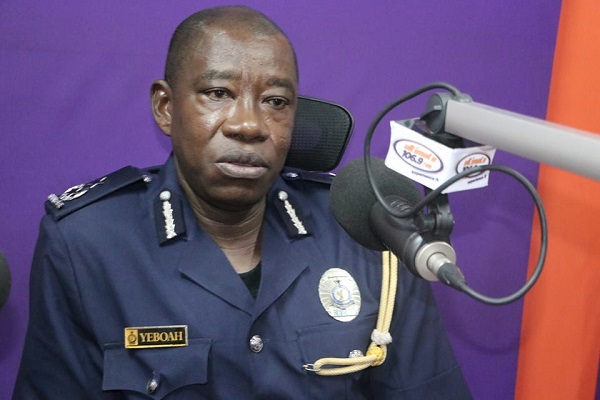
Head of the Criminal Investigations Department (CID) COP Ken Yeboah has disclosed that the Interpol red alert issued for Samuel Adam Fosters also known as Samuel Adam Mahama and three others over their role in the Airbus bribery scandal was mediated by his office.
He explained that the Office of the Special Prosecutor requested the CID to inform Interpol about an investigation they had begun into the matter and as such needed these four persons interdicted.
The Interpol is under the auspices of the CID, hence their involvement, he disclosed.
Mr Yeboah’s clarification comes after a member of the legal team of the opposition NDC Abraham Amaliba described as “ridiculous” and a “hoax”, the red alert issued since information was not published on the Interpol’s official website.
Speaking to sit-in host Lantam Papanko on the Morning Starr, COP Yeboah explained that “the office of the special prosecutor requested us to inform Interpol that they have begun some investigations and he needed these four people to prosecute. So, we forwarded it to Interpol headquarters and they replied us that they had gone through it and issued a red alert for the four. And so when it came we also forwarded it to the office of the special prosecutor because we are not the lead investigators.
“He is doing his work, so the CID was just a channel through which we forwarded everything to Interpol. Because Interpol is directly under the CID.”
Commenting on the unavailability of the alert details on Interpol’s website he indicated “so, as to whether its on their website or not I will not be in a position to answer that question. But I can assure everybody listening that to the best of my knowledge he forwarded everything to my office, my office forwarded everything to Interpol Lyon, and then Interpol Lyon replied with their pictures, the four of them.”
“As to their website, I don’t have any idea. But it is genuine. With the Interpol you cannot alter anything, so they can verify from Interpol Lyon if they are doubting it. But I can assure you it is genuine.”
The alert on the four according to the CID boss means that wherever they are, they will be arrested, detained, and then picked up by Ghana security officers.
The Jubilee House has rejected the petition to recall Auditor General Daniel Domevelo from his controversial leave.
Some Ghanaians abroad petitioned the Presidency to bring back the Auditor General saying the decision to ask him to go on leave was an affront to Ghana’s democracy.
But responding to the petition, the Presidency said the various arguments being raised in the petition were first considered by the President before the directive was issued.
Meanwhile, Pressure Group OccupyGhana has backed calls for President Akufo-Addo to reverse his directive to Auditor General Daniel Domelevo to proceed on leave.
It comes after several civil society groups signed a petition for the outspoken anti-graft campaigner to be brought back to work.
The President in a statement directed the Auditor General to proceed on his accumulated leave.
The move has sparked anger among some Ghanaians with some questioning the President’s commitment to the fight against corruption.
Below is a statement by OcuppyGhana
OccupyGhana® has observed with great disquiet the circumstances leading to and following the President’s directive to the Auditor-General to proceed on an ‘accumulated leave.’ We find it difficult reconciling that directive with the constitutional injunction under which in the performance of his functions, which necessarily includes the mundane matter of whether, when and how he takes his leave, the Auditor-General is insulated from the ‘direction and control of any person or authority.’
While it may be best industrial, governance and management practice for every worker, including the Auditor-General, to take an annual leave, we think the constitutional insulation of that office is clear and leaves no room for any penumbra within which the presidential directive may operate. Even if there was, which we dispute, the circumstances of this matter should have given the Executive a great opportunity for exercising restraint of power and the development of the constitutional check and balances inherent in the creation and protection of independent constitutional bodies.
Ours is still a nascent democracy that requires all of us to assist in upholding the independence of constitutionally protected bodies such as the Auditor-General, the Electoral Commission, CHRAJ and the Judiciary. Ghana would be the ultimate loser if presidential power is deployed to micromanage any of these independent constitutional bodies, contrary to the express terms of the Constitution.
We also believe that this matter ought to be resolved by the Council of State in a manner that upholds restraint of power and errs on the side of the development of the constitutional check and balances inherent in the creation and protection of the independent constitutional bodies.
Leave Is a Constitutional Right
First, leave is a constitutional right, and not a statutory obligation. With respect to the Auditor-General, article 187(12) of the Constitution specifically mentions, recognises and protects ‘his rights in respect of leave of absence.’ These words are repeated verbatim in section 10(7) of the Audit Service Act.
The leave entitlement of the Auditor-General is part of the terms and conditions of his office, expected to be provided under article 71 of the Constitution. Under that article, the ‘facilities and privileges’ of the Auditor-General (which definitely includes ‘his rights in respect of leave of absence’) is first recommended by the relevant Article 71 Committee and then determined by the President, acting in accordance with the Council of State’s advice.
From our checks, the relevant and applicable Article 71 Committee Report is the Edu-Boandoh Report of August 2016, which was to apply for 2013 to 2017 but has continued in operation because there is no other, current Report. Our review of that document shows that it contains no provision on the Auditor-Generals’ leave entitlement.
To compound matters, the whopping 40-day leave provided under the Conditions Of Service For Management Staff of the Audit Service dated 30 July 2008 (extended by the reported practice that adds 4 days of ‘travel time’ to annual leave periods for some public officers) does not apply to the Auditor-General. That document, prepared by the Board of the Audit Service under article 189(3) of the Constitution states expressly as follows: ‘These Conditions of Service…shall apply to the Management Staff of the Audit Service (Deputy Auditors-General, Assistant Auditors-General and Directors) other than the Auditor-General.’
In this situation, all that an Auditor-General is assured of, is the minimum 15 days entitlement provided for under section 20 of the Labour Act.
Further, and with respect to leave being a right and not an obligation, article 24(2) of the Constitution assures all workers of ‘rest, leisure and reasonable limitation of working hours and periods of holidays with pay, as well as remuneration for public holidays.’ These are assurances, not obligations. Thus, if a worker may voluntarily opt to work beyond the normal ‘limitation of working hours,’ then that worker does nothing wrong in deciding to take less or even no ‘periods of holidays with pay,’ however personally unhealthy that might be.
That is why section 31 of the Labour Act cannot be interpreted or applied to convert the constitutional right into its exact opposite, a statutory obligation. Such an interpretation or application is not only unconstitutional, but does violence to the internal harmony of the Labour Act itself, section 20 of which aligns with the position of the superior provisions of the Constitution, that leave is a right.
While we may debate the propriety or otherwise of not taking one’s leave entitlement, and also debate the meaning of the outlawing of an ‘agreement’ to relinquish or forgo leave under section 31 of the Labour Act, whichever meaning is applied cannot turn or flip the constitutional right on its head into a statutory obligation.
Thus, we respectfully think that the singling out of the Auditor-General and applying leave to him as an obligation is a grave error and a regrettable unconstitutional act.
Our worries got even exacerbated when the presidency purported to direct the Auditor-General to also proceed on his 2020, largely unearned leave when 2020 is only about halfway through. While that directive is also unconstitutional by itself, in our view, it also breaches section 20 of the same Labour Act that the presidency relies upon, which speaks of the right to leave being ‘in any calendar year of continuous service.’
2020 is not over and every worker, subject to arrangements with the employer, technically has until the last 15 days of the year (the minimum statutory period of leave) to exercise that right. The presidency’s direction to the Auditor-General to take his 2020 leave literally in the middle of the year, could become a bad precedent that can only harm our constitutional development.
We are further alarmed at the purported reliance on some previous direction to another Auditor-General to proceed on accumulated leave. We are convinced that that alleged administrative precedent was illegal and unconstitutional, and that the quiet compliance with, and failure, refusal or neglect of the affected person then to challenge it (reminiscent of the period where successive Auditors-General were too scared to even exercise their constitutional disallowance and surcharge powers), does not convert that illegality and unconstitutionality into a much-desired precedent, worthy of being followed.
We are certainly not convinced by the purported reliance on the decision of the Court of Appeal in Adrah v ECG. That decision was simply that an employer could not provide for commuting leave into cash in its Staff Manual and then assert in court that that was illegal. Dzamefe JA characteristically did not mince his words. He said ‘ECG cannot play hot and cold at the same time… It is contradictory. The company’s negligence and mistakes cannot be visited on the innocent employee.’
In his detailed concurring opinion, Ofoe JA spent considerable time to analyse and interpret section 31 of the Labour Act and held that what that section did was to deny the worker the right to sell his leave and prevent the employer from buying that leave. However, based on the specific facts of the matter, he held that in equity, it would be unconscionable, grossly unfair, manifestly unjust and fraudulent to allow ECG to rely on this section of the Act. He would not allow ECG to use the law as an engine of fraud and therefore held that it is not every agreement to forgo leave that is void and for which accumulated leave yields no benefits for the worker.
Thus, throughout this unanimous decision, the Court was careful to uphold the fact that leave is an entitlement to the worker. For section 31 to apply, it held, there must be an agreement to sell the leave. That is what was outlawed. This case did not provide any general support to compelling any worker to go on so-called accumulated leave.
What the case rather establishes is that section 31, on which the entire presidential direction appears to be based, outlaws agreements to sell or purchase leave. Thus, where the worker fails or neglects to take or commence leave in the calendar year the worker loses the leave days and cannot be paid for it, unless the court finds grounds to the contrary.
We must also comment on the eye-popping leave entitlement of some public officials. 44 working days of leave, in addition to the 13 days of public holidays, means that for three months in each year, these public official enjoy leisure and rest, while being paid by the tax payer. It is time to begin a national debate on whether it is right at out stage of development when hard work is what is required, for public officials to work for just three-quarters of a year, and to enjoy paid rest for one-quarter of the year.
The reality, we know, is that several public officials never took the full leave entitlement. The simply sold it back to us and we paid for it. This is what section 31 seeks to prevent, according to the Court of Appeal in Adrah v ECG.
Thus, neither the purported administrative precedent nor purported judicial precedent is applicable or of any relevance to this matter.
We should also look beyond the immediate and be concerned about why at least two Auditors-General have been reluctant to take their full leave entitlements, and the role that the Board of the Audit Service plays in all of these matters.
Independence of the Auditor-General
The Constitution vests in the Ghanaian presidency, some of the most immense powers in any democracy on earth. The President is the repository and embodiment of executive power and authority, and gets to appoint almost every actor in the public service.
But having vested such immense powers in the President, the Constitution puts in place certain checks and balances that, hopefully, would restrain the exercise of those powers and not leave Ghana with the oxymoron or contradiction of a democratic, constitutional dictatorship to replace the dictatorship that we quietly rejected and overthrew when we voted to enact this Constitution at a national referendum held throughout Ghana on the 28 April 1992.
One way in which the Constitution checks presidential power is the creation of independent constitutional bodies or offices. Although the President appoints persons to those bodies or offices, the President has and exercises absolutely no power over them after they are appointed. As hard as that may be to accept, the President has no political, executive, administrative, financial or even disciplinary power over those offices.
Those bodies or offices are the Electoral Commission, CHRAJ, NCCE, National Media Commission, Public Services Commission, Lands Commission, and of course the Auditor-General. By the use of the radical and mandatory words ‘shall not be subject to the direction or control of any person or authority,’ the Constitution insulates these from being subjected to any other entity, including the Executive and Parliament. The only other body with similar insulation is the Judiciary.
Yet the Constitution did not seek to constitute those offices into demi-gods. It therefore subjects them and their operations to the Constitution and the law, by providing specific, limited instances for calling them to order, such as articles 23, 33, 295(8) and 296 of the Constitution.
That is why in the 25 June 2020 ruling of the Supreme Court in NDC v AG & EC (Consolidated), the Court felt constrained to refer to and reiterate its 2016 decision in Abu Ramadan & Gary Nimako v EC (No 2), that an independent body such as the EC in the exercise of its functions, ‘cannot be compelled to act in a particular manner unless there is clear evidence that they have acted unconstitutionally,’ and that it was ‘necessary to keep the Court itself within its proper limits in order to give effect to the supremacy of the law.’ We commend this exemplary exercise of restraint of power, to the Executive and Legislature in their dealings with these bodies.
This constitutional architecture that restrains even the highest court of the land from giving directions to or exercising control over these bodies, in the absence of any evidence of unconstitutionality, is deliberate. These bodies are expected to counter-balance and check the power of, and stand up to, all other persons or authorities, if need be. Thus our Constitution does recognises not just the traditional three branches of power, but carves out and ring fences another branch, composed by the independent constitutional bodies, essential watchdog bodies, and insulates them from any control. By this, the Constitution anticipates and expects ‘healthy tension’ between these bodies and other persons and authorities, and therefore protects the former from the whims and caprices of the latter, in the expectation that out of that ‘equilibrium of tension,’ (to borrow from Nixon v Sirica) Ghanaians would be protected from oppression.
Separation of powers is ‘not to promote efficiency but to preclude the exercise of arbitrary power. The purpose was not to avoid friction, but by means of the inevitable friction incident to the distribution of the governmental powers… to save the people from autocracy’ (Myers v United States.)
This is the state of the unique separation within even executive power, meant to hold the otherwise super-powerful executive presidency in check. Thus, although the occupants of the independent office are public officers appointed by the President, the latter shall not direct and control them in any manner whatsoever.
Therefore, the argument from the presidency, that article 297(a) subjects these bodies to the President’s disciplinary control simply on account of his having appointed them is implausible, is untenable and drives a fleet of Ayalolo buses through the carefully constructed constitutional architecture meant to prevent just that.
The fact that a past President breached that constitutional architecture and got away with it, sets a bad precedent. Bad precedents are not followed. Bad precedents are not justified. If this is not checked and rolled back immediately, we will be setting further bad precedents that will eventually erode the precious little constitutional checks on executive power that exist.
Concluding Comments
OccupyGhana® has from its formation been interested in the work of the Auditor-General and a great deal of our time, resources, advocacy and efforts have been directed toward making that office work to protect the national purse. When the occupant of that office and the powers-that-be at the time would not listen to us, we went to the Supreme Court.
The victory that we won and the seminal decision in OccupyGhana v AG, marked a turning point in the work of that office in the history of this nation. Not only that, we drafted and submitted the bill, which together with changes made by the Rules of Court Committee, was enacted as High Court (Civil Procedure) (Amendment) (No 2) Rules, 2016 (CI 102), to regulate appeals from the Auditor-General’s disallowances and surcharges.
However, we can never discount the yeoman’s role that this Auditor-General has personally played in seizing the opportunity offered by judgment by the scruff of the neck and running with it.
In the State of the Nation Address delivered on 8 February 2018, the President endorsed the work of OccupyGhana® with the Auditor-General as follows: ‘The role of OccupyGhana in increasing awareness of the importance of the work of the Auditor-General should be recognised.’
The President made this statement after recounting the huge savings Ghana had made from a blatant attempt by some public officers to swindle the nation, but for the work of the Auditor-General. The President said: ‘a staggering amount of GH¢5.4 billion has been identified as constituting fictitious claims.’
It remains a source of surprise to us that no person involved in making those fictitious claims, which Auditor-General’s work exposed, has faced prosecution or even compelled to take a leave.
In a speech delivered by the Vice President at a town hall meeting held on 3 April 2019, he referred to this saving and said of the work of the Auditor-General:
‘In addition to this, 112 Certificates have been issued and a total amount of GH¢511,211,239.04 was levied against individuals, companies and institutions who committed financial infractions against the State. Also, GH¢67million had been recovered from disallowances and surcharges. This is protecting the public purse.’
We bring these up because we do not think that Auditor-General should be subjected to this treatment on account of him losing his leave. Although he has not taken the full complement of his leave, his office has been audited each year by the independent auditing firm appointed by Parliament for that purpose under article 187(15) of the Constitution.
The combination of the decision in OccupyGhana v AG and the Auditor-General’s sterling work has raised the stature and profile of Ghana in the world of auditors to the extent that some African countries, namely South Africa, Liberia and Sierra Leone (and Zambia, earlier in time), have adopted Ghana’s disallowance and surcharge provisions, so that their Auditors-General can do what has been done in Ghana.
When the history of the office of the Auditor-General is written, the appointment (and even the timing and circumstances of it), the work of the current Auditor-General and the phenomenal financial and other support that this government gave to his office, should be what are highlighted. That story should not end with a final paragraph that says in the twilight of his public service, the Auditor-General was subjected to an unconstitutional removal from office dressed up as an enforced accumulated leave.
The constitutional history of the Fourth Republic is replete with stories of the ‘little people’ who, with their lawyers, stood up to and stared down at authority, and helped shape our constitutional rule. Key examples are found in the ex parte Ampong and ex parte Adim Odoom cases where ‘ordinary’ civil servants and their lawyers refused to be cowed by the might of the presidency. They stood up to the then President, and with the support of the courts, established that the President had no disciplinary powers over civil servants and could not place them on interdiction. The principle that supported their efforts then, should be alive, respected and upheld today.
We call on the President to revoke the directive and allow the administrative system in the Auditor-General’s office to appropriately evolve, like every other institution, and perfect some of the very basic matters such as leave in order to safeguard the constitutional principles which justified guaranteeing the independence of office. We should do all in our power as a nation not to sour and soil one of the few highlights in the generally and historically stuttering fight against corruption in Ghana.
Considering the seriousness of this matter, we also call on the Council of State to intervene, in the exercise of its advisory mandate under article 91(3) of the Constitution to ‘upon request or on its own initiative, consider and make recommendations on any matter being considered or dealt with by the President.’
We identify with and endorse the unified position of fellow Civil Society Organisations to demand a reversal of this directive.
We also commend to all the wisdom and foresight in the enduring and near-prophetic words of Dotse JSC in his powerful and insightful dissent in Appiah-Ofori v AG:
‘It should be noted that in view of the very important watchdog role that the Auditor-General plays or is supposed to superintend in the transparent use and accountability of the public purse, any attempt to prejudice and/or compromise his position by linking it to the pleasure of a sitting President, is untenable. This is because the President is the head of the Executive Branch of Government whose use of monies entrusted to them, the Auditor-General is mandated to audit… Once appointed to that office, the Auditor-General must have his continued stay in office subject only to this Constitution, and no more.’
The presidency does not deserve this. The Auditor-General does not deserve this. More importantly, Ghana does not deserve this. Yours in the service of God and Country
Founder of the National Democratic Congress (NDC), former President Jerry John Rawlings, has congratulated former Minister for Education, Professor Jane Naana Opoku Agyemang on her selection as Vice-Presidential candidate of the National Democratic Congress (NDC).
The former President said prior to the announcement, he was informed by the party’s Presidential candidate, former President John Dramani Mahama that following consultations with the party hierarchy, Professor Opoku Agyemang was the favourite among a list of shortlisted candidates.
“If this was the case then there was no reason to stand against it even though I had a few others in mind,” the former President said when the former President and leading party executives called on him on Thursday to introduce the Vice-Presidential candidate.
The party founder urged Professor Opoku Agyemang not to deviate from her principles of integrity. He also urged Ghanaians to go out to register towards the December Presidential and Parliamentary elections, calling on political parties to desist from activities that will create civil unrest.
Earlier, former President John Mahama in introducing his running mate said Professor Opoku Agyemang had the credentials worthy of her selection and listed several achievements including her appointment as the first female Vice Chancellor of a Ghanaian university and her significant contribution to the educational sector during her tenure as Minister.
General Secretary, Johnson Asiedu Nketia who accompanied party Chairman, Samuel Ofosu Ampofo and Kofi Attoh, party Vice Chairman to the meeting, said Professor Opoku Agyemang was a very good choice. General Mosquito as he is popularly known, said the Vice-Presidential candidate was outstanding and he was confident the party will win the upcoming elections. He said the selection of Professor Opoku Agyemang goes to prove internationally that the NDC stands for the promotion of youth and women empowerment.
Messi: “We didn’t want to end the season like this but it represents how the season has gone. We were a very erratic, very weak, low-intensity team… We lost a lot of points and today’s game is a summary of the season.”
“All we have been through from January to now has been very bad. We have to change many things for sure.”
“Roma, Liverpool… the fans are running out of patience because we’re not giving them anything. If we want to fight for the Champions League, a lot has to change.”
“If we continue like this, we will lose the game against Napoli.”
“We have to be self-critical, starting with the players, but across the whole club.”
The Christian Council of Ghana wants leaders of the country to take giants steps towards ensuring peace before, during and after the December 7, 2020, general elections.
Members of the group who have expressed serious worry over acts of violence and misconduct during the electioneering period say the political space in the country has been plagued with what they term as demonic forces.
Among the execrable activities, they want to be ridden off in the Ghanaian political discourse are sabotage tribalism, hate speech and abuse of power.
These were highlighted in a speech by the Council under the leadership of its chairman, Rt. Rev. Prof. Joseph Obiri Yeboah Mante during the outdooring of the group’s Eminent Persons.
The Christian Council of Ghana wants leaders of the country to take giants steps towards ensuring peace before, during and after the December 7, 2020, general elections.
Members of the group who have expressed serious worry over acts of violence and misconduct during the electioneering period say the political space in the country has been plagued with what they term as demonic forces.
Among the execrable activities, they want to be ridden off in the Ghanaian political discourse are sabotage tribalism, hate speech and abuse of power.
These were highlighted in a speech by the Council under the leadership of its chairman, Rt. Rev. Prof. Joseph Obiri Yeboah Mante during the outdooring of the group’s Eminent Persons.
The Christain Council has therefore expressed its willingness to seriously but humbly engage political leaders, the media, security agencies, the Electoral Commission and the citizenry to making sure that Ghana has free, fair and just elections devoid of any intimidation or violence.
According to Rev. Mante, “I have observed some four demonic forces in Ghana’s politics that must be exorcised. We may in future make time to break down and expatiate on them more carefully, but for the sake of time, I will only touch on them briefly.”
These are:
1. The demon of wishing the downfall of a ruling government just to gain political points. We should note that anytime this demonic trait is triggered we all lose as a country; we never progress in our development as a country in that kind of environment. This spirit must be exorcised.
2. The demon of ethnic or tribal polarization. There are people in this country who sometimes give the impression that some tribes are more Ghanaian than other tribes. The worse thing is that they use it politically during the elections period. This is a demon that must be exorcised. This position can be held by either the ruling government in power. Ghana does not belong to any particular ethnic or tribal group; it belongs to all of us-Dagombas, Kusaasis, Bonos, Asantes, Ewews, Fantes, Kwahus, Akyems, Akuapems, etc, we are all one people. The politics of tribal polarization during the electioneering campaign is demonic and it must be stopped immediately and exorcised from our growing democracy.
3. The demon of uncultured and hate speech and lies. Just because of elections people insult other people’s character and personalities; some very young men (small boys and girls) just insult others who are far older than them to even be their fathers and mothers. Sometimes one wonders who nurtured such people. This attitude is a disgrace in Ghana’s politics and it must be eschewed. Do we want to teach the younger generation that politics ais a dirty game? Is that what we want to leave with our children? This is a shame and a demon that must be exorcised.4. The demon of violence and abuse of power. There are people who talk about violence and act violently. They exhibit these characteristics during electioneering campaigns. Sometimes their leaders acquiesce and support them by not saying anything. When those who speak and act violently are supported by those in power then there is no country but anarchy. This is definitely evil.
Founder of the National Democratic Congress (NDC), former President Jerry John Rawlings, has congratulated former Minister for Education, Professor Jane Naana Opoku Agyemang on her selection as Vice-Presidential candidate of the National Democratic Congress (NDC).
The former President said prior to the announcement, he was informed by the party’s Presidential candidate, former President John Dramani Mahama that following consultations with the party hierarchy, Professor Opoku Agyemang was the favourite among a list of shortlisted candidates.
“If this was the case then there was no reason to stand against it even though I had a few others in mind,” the former President said when the former President and leading party executives called on him on Thursday to introduce the Vice-Presidential candidate.
The party founder urged Professor Opoku Agyemang not to deviate from her principles of integrity. He also urged Ghanaians to go out to register towards the December Presidential and Parliamentary elections, calling on political parties to desist from activities that will create civil unrest.
Earlier, former President John Mahama in introducing his running mate said Professor Opoku Agyemang had the credentials worthy of her selection and listed several achievements including her appointment as the first female Vice Chancellor of a Ghanaian university and her significant contribution to the educational sector during her tenure as Minister.
General Secretary, Johnson Asiedu Nketia who accompanied party Chairman, Samuel Ofosu Ampofo and Kofi Attoh, party Vice Chairman to the meeting, said Professor Opoku Agyemang was a very good choice. General Mosquito as he is popularly known, said the Vice-Presidential candidate was outstanding and he was confident the party will win the upcoming elections. He said the selection of Professor Opoku Agyemang goes to prove internationally that the NDC stands for the promotion of youth and women empowerment.
The International Criminal Police Organisation (Interpol) has issued an arrest warrant for Samuel Adam Fosters aka Samuel Adam Mahama in connection with his role in the Airbus bribery scandal.
He is being charged for accepting bribe to influuence a public officer and acting in collaboration with a public officer for the public officers private gain.
According to Interpol, for the offence he is liable to a term of imprisonment not exceeding of 25 years.
The arrest warrant which was issued on July 10, said once Mr Adam Mahama is traced, “assurances are given that an extradition will be sought upon arrest of the person, in conformity with national laws and/or the applicable bilateral and multilateral treaties.”Ghana is one of five countries in which the European aviation giant, Airbus, paid or attempted to pay millions of dollars in bribes in exchange for contracts, leading a court in Britain to slap a fine of £3 billion on the company.
The International Criminal Police Organisation (Interpol) has issued an arrest warrant for Samuel Adam Fosters aka Samuel Adam Mahama in connection with his role in the Airbus bribery scandal.
He is being charged for accepting bribe to influence a public officer and acting in collaboration with a public officer for the public officers private gain.
According to Interpol, for the offence he is liable to a term of imprisonment not exceeding of 25 years.
The arrest warrant which was issued on July 10, said once Mr Adam Mahama is traced, “assurances are given that an extradition will be sought upon arrest of the person, in conformity with national laws and/or the applicable bilateral and multilateral treaties.”
Ghana is one of five countries in which the European aviation giant, Airbus, paid or attempted to pay millions of dollars in bribes in exchange for contracts, leading a court in Britain to slap a fine of £3 billion on the company.
In court documents and hearings, Airbus admitted five counts of failing to prevent bribery, using a network of secret agents to pay large-scale backhanders to officials in foreign countries, including Ghana, to land high-value contracts.
The scheme was run by a unit at Airbus’ French headquarters, which its one-time chief executive, Tom Enders, reportedly called “bullshit castle”.
According to the report, there are six key actors involved in the scandal regarding Ghana.
Investigators from the UK’s SFO identified them only as Government Official 1 (high ranking and elected), Intermediary 5 (British national and close relative of Government Official 1), Company D (corporate vehicle for Intermediary 5 – shareholder), Intermediary 6 (British national and associate of Intermediary 5), Intermediary 7 (British national and associate of Intermediary 5), as well as Intermediary 8 (Spanish company and front for Intermediary 5).
Other British citizens; Philip Sean Middlemiss; Sarah Davis and Sarah Furneaux are connected to the case for their roles in the scandal.
Who is Samuel Adam Mahama?
Samuel Adam Foster aka Samuel Adam Mahama was born in Tamale on 14 December 1962 to Emmanuel Adamah Mahama and Nana Suluwu.
His current Ghanaian passport was guaranteed by John Mahama, described as former president of Ghana as first guarantor, and Alfred Abdulai Mahama, described as a Civil Servant, as second guarantor.
The Electoral Commission, EC has refuted claims that about 40 percent of the Biometric Voter Registration, BVR kits are old.
It says the new kits are completely different from the old ones in terms of appearance and functionality.
Additionally, they can print out daily information that makes data collection easy and has charging points in the front with two LED alert lights which the old one do not have.
The EC in a statement challenges those coming out with the misleading reports to name the centres where the old kits are being used.
It explained that eight thousand 500 Biometric Voter Registration Kits were bought and deployed to the field as part of the procurement of a new Biometric Voter Management System.
The EC says it will not depart from its mandate in the performance of its functions.




 Site Title